Modern Exotic Jungle Fruits and Plants: Elevating Projects with Floral Seamless Pattern Design
The visual language of design is constantly evolving, yet nature remains an inexhaustible source of inspiration. Among the most vibrant trends currently dominating surface design and digital graphics is the modern interpretation of tropical flora. When designers seek to capture this lush aesthetic, they frequently turn to floral seamless pattern design featuring exotic jungle fruits and plants. This specific niche moves beyond traditional, delicate florals into a realm of bold colors, oversized foliage, and intricate fruit textures that demand attention.
Creating or utilizing these patterns is not merely about placing flowers on a background; it is about constructing a cohesive visual rhythm. The integration of modern exotic elements requires a balance between organic chaos and structured repetition. For professionals working in packaging, textiles, or web design, understanding the technical and aesthetic nuances of these vector illustrations is essential for producing high-impact work that resonates with contemporary audiences.
The Aesthetic Shift Toward Modern Tropical Illustration
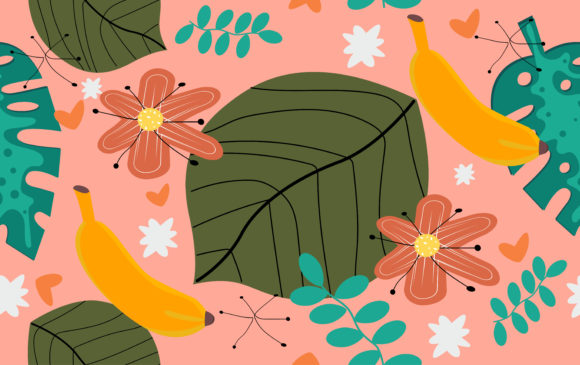
Historically, floral patterns were often associated with vintage aesthetics or subdued, repetitive motifs. The modern exotic jungle style disrupts this expectation. It embraces saturation and scale. In current floral seamless pattern design, we see monstera leaves spanning entire tile widths, dragon fruits rendered in neon pinks and greens, and passion flowers depicted with geometric precision rather than painterly softness.
This shift reflects a broader cultural desire for vibrancy and escapism. Digital interfaces and physical products alike benefit from this energy. However, achieving this look without appearing cluttered requires deliberate artistic choices. The "modern" aspect often implies a cleaner line weight, flatter coloring styles, or stylized gradients that translate exceptionally well to vector formats. Unlike raster images, which can lose fidelity when manipulated, vector-based jungle illustrations maintain crisp edges whether printed on a business card or a billboard.
Why Vector Format Matters for Botanical Assets
For designers sourcing or creating these assets, the file format is just as important as the visual style. Vector graphics are the industry standard for floral seamless pattern design because they offer infinite scalability. When dealing with complex botanical details like the spiky exterior of a pineapple or the veining on a palm frond, vectors preserve these intricacies at any resolution.
A critical specification to look for or adhere to is the -eps10 standard. Encapsulated PostScript (EPS) version 10 is widely regarded as the sweet spot for compatibility and functionality. While newer versions exist, EPS10 ensures that the file opens correctly across virtually all major design software, including older versions of Adobe Illustrator, CorelDRAW, and Affinity Designer. It supports the necessary path complexity for detailed jungle fruits while avoiding the compatibility errors sometimes found in newer, proprietary AI formats. Choosing -eps10 files guarantees that your workflow remains smooth, regardless of the tools in your arsenal.
Technical Considerations in Seamless Pattern Creation
A true seamless pattern must be invisible in its repetition. This is particularly challenging with organic subjects like jungle plants, which naturally grow in irregular, asymmetrical ways. Successful floral seamless pattern design masters the art of controlled randomness. The designer must create a tile where elements crossing the right edge perfectly align with those entering from the left, and similarly for the top and bottom boundaries.
When working with exotic fruits and dense foliage, negative space becomes a functional element. Without adequate breathing room between heavy visual anchors like papayas or banana bunches, the pattern can become visually exhausting. Effective designs use smaller filler elements—vines, seeds, or small blossoms—to bridge gaps without adding visual weight. This hierarchy guides the viewer’s eye across the surface, preventing the "grid effect" where the underlying square structure of the repeat becomes obvious.
- Color Consistency: Ensure color profiles are managed correctly within the vector file to prevent shifting when moving between CMYK for print and RGB for screen.
- Path Optimization: Jungle illustrations can contain thousands of anchor points. Simplifying paths reduces file size and improves rendering speed without sacrificing visual quality.
- Layer Organization: Proper grouping of botanical elements allows for easier recoloring and editing later in the production pipeline.
- Tile Verification: Always test the pattern swatch at multiple scales to ensure no visible seams or awkward overlaps occur during application.
Practical Applications Across Industries
The versatility of modern exotic jungle vectors extends far beyond decorative backgrounds. In the packaging industry, these patterns serve as powerful shelf differentiators. Beverage brands, cosmetic lines, and snack companies utilize bold floral seamless pattern design to signal natural ingredients and freshness. The ability to scale vector elements means a single illustration asset can be adapted for a bottle label, a shipping box, and a social media banner simultaneously, ensuring brand consistency.
In fashion and textile design, the -eps10 format facilitates direct integration into CAD systems used for fabric printing. Designers can easily adjust the scale of the repeat to suit different garments; a large-scale jungle fruit motif might work beautifully on a summer dress, while a scaled-down version of the same pattern could be appropriate for lining or accessories. Because vectors are mathematically defined, resizing does not introduce pixelation, preserving the professional finish required in apparel manufacturing.
Web and app designers also leverage these assets to add texture and depth to user interfaces. Used subtly as a background overlay or boldly as a hero section element, tropical vectors inject personality into digital spaces. The lightweight nature of optimized vector files contributes to faster load times compared to high-resolution photographic alternatives, supporting both aesthetic goals and performance metrics.
Selecting the Right Asset for Your Workflow
Not all jungle patterns are created equal. When evaluating resources for floral seamless pattern design, consider the intended end-use before downloading or purchasing. A pattern designed for textile printing may have a different color gamut and repeat size than one optimized for web backgrounds. Scrutinize the preview images for seam visibility; if you can spot the repeat in the thumbnail, it will likely be problematic in production.
Pay close attention to the licensing and technical specifications. Confirming that the file is indeed -eps10 compatible saves significant troubleshooting time. Additionally, assess the editability of the vector. Are the shapes merged into single compound paths, or are individual leaves and fruits separated? Separated elements offer greater flexibility for customization, allowing you to rearrange compositions or swap colors to match specific project requirements. Merged paths, while sometimes smaller in file size, can be frustrating to modify.
Finally, consider the stylistic coherence of the collection. Modern exotic design ranges from flat, minimalist icons to richly shaded, semi-realistic renderings. Mixing these styles within a single project can create visual dissonance. Selecting a comprehensive pack or collection ensures that all botanical elements share the same stroke weight, shading technique, and color palette. This consistency is what ultimately elevates a design from a simple assembly of clip art to a sophisticated, professional-grade visual system.
Customization and Future-Proofing
Acquiring a high-quality vector pattern is often just the starting point. The true value lies in adaptation. Designers should feel empowered to deconstruct floral seamless pattern design assets to create unique derivatives. Extracting a single exotic fruit to use as a standalone icon, or isolating a specific leaf arrangement for a border, maximizes the return on investment for any design resource.
Furthermore, maintaining organized libraries of these -eps10 assets builds a valuable internal resource. As trends cycle, having a repository of well-crafted, technically sound botanical vectors allows for rapid prototyping and iteration. The timeless appeal of nature, combined with modern execution and robust file standards, ensures these assets remain relevant long after their initial creation. By prioritizing technical quality and aesthetic intentionality, designers can harness the power of the modern jungle to create work that is both visually stunning and practically superior.