Evaluating the Foliage Watercolor Floral Frame for Design Projects
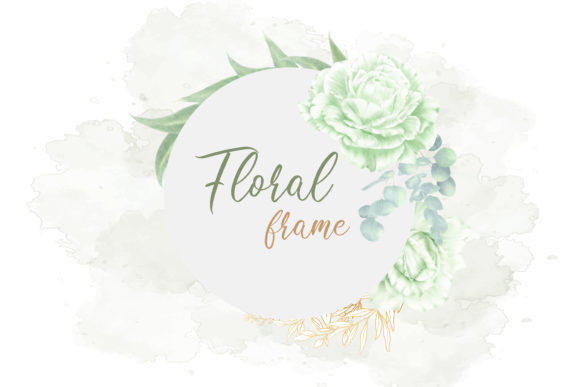
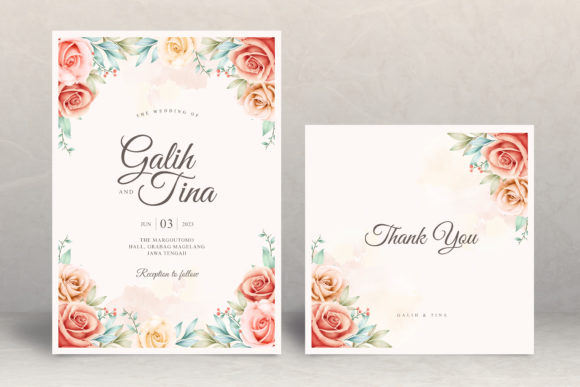
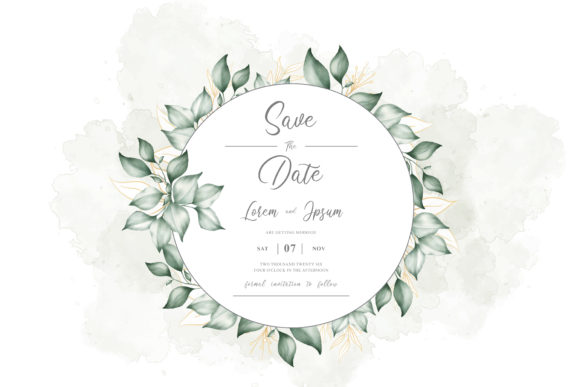
The Foliage Watercolor Floral Frame is a digital design asset characterized by hand-painted botanical elements arranged in a border configuration. Unlike rigid vector graphics or photographic stock images, this specific type of frame utilizes watercolor textures to create an organic, soft aesthetic that mimics traditional media. For designers, event planners, and content creators, evaluating this asset requires understanding its technical specifications, practical applications, and limitations within a professional workflow. The primary value proposition lies in its balance of artistic authenticity and digital editability, specifically through features like customizable text color and editable layouts using only free fonts.
Defining the Asset and Its Core Utility
At its foundation, the Foliage Watercolor Floral Frame serves as a decorative boundary for central content. It is distinct from full-coverage backgrounds because it preserves negative space, allowing typography or photography to remain the focal point. The "watercolor" designation implies visible brush strokes, pigment bleeding, and paper texture, which adds tactile depth to digital designs. When researching this asset, it is important to distinguish between raster-based watercolor frames and vector simulations. True watercolor frames often retain the imperfections of physical painting, which contributes to their appeal but also dictates how they can be manipulated.
The inclusion of an EPS (Encapsulated PostScript) file is a critical technical feature for evaluation. EPS is a versatile vector format that supports both vector paths and embedded raster imagery. This duality allows the foliage elements to be scaled without pixelation while maintaining the integrity of the watercolor texture. For users working across various print sizes—from small business cards to large wedding signage—the EPS format ensures consistency. Furthermore, the specification that the template uses only free fonts removes a significant barrier to entry. Many premium templates require expensive commercial font licenses; by relying on open-source or free-for-commercial-use typefaces, this frame reduces total project cost and simplifies legal compliance.
Assessing Editability and Customization Features
A major factor in selecting a Foliage Watercolor Floral Frame is the ease of use regarding customization. The ability to customize text color is not merely an aesthetic choice but a functional necessity for brand alignment. In many watercolor assets, the background art is flattened, making color changes difficult. However, high-quality editable frames separate the foliage layer from the text layer. This separation allows users to adjust typography hues to match specific Pantone references or brand guidelines without altering the underlying artwork.
Ease of use extends beyond color swapping. An effective frame should have organized layers and clear grouping within the EPS or source file. When evaluating a download, users should verify that text placeholders are actual editable text boxes rather than outlined shapes. Outlined text cannot be re-typed without recreating the letterforms, which negates the benefit of using a template. The promise of "easy to use" should be validated by checking if the file structure supports standard software like Adobe Illustrator, Affinity Designer, or compatible free alternatives like Inkscape. If the learning curve for modifying the frame exceeds the time saved by using it, the asset may not be efficient for quick-turnaround projects.
Benefits and Practical Applications
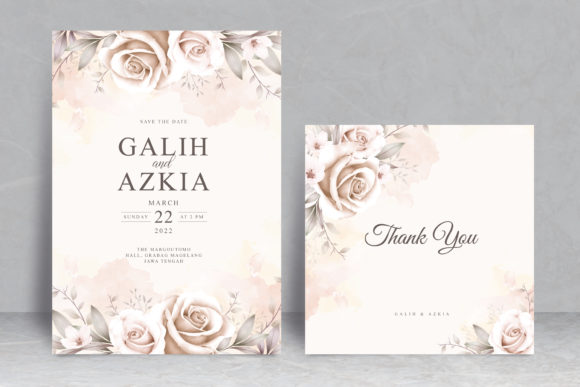
The primary benefit of the Foliage Watercolor Floral Frame is its versatility across print and digital mediums. The organic nature of foliage makes it particularly suitable for industries that value natural aesthetics, such as weddings, sustainable brands, skincare lines, and artisanal food products. The frame provides immediate visual context, signaling elegance and craftsmanship without requiring custom illustration work.
- Cost Efficiency: By utilizing free fonts and a single reusable asset, designers can maintain visual consistency across a suite of materials (invitations, menus, social media posts) without purchasing multiple unique illustrations.
- Time Savings: Creating authentic watercolor borders from scratch requires specialized artistic skills and significant rendering time. This frame bridges the gap between bespoke art and instant templates.
- Scalability: The EPS inclusion ensures that the frame remains crisp whether used as a 4-inch Instagram story border or a 24-inch welcome sign.
- Licensing Simplicity: Assets restricted to free fonts eliminate the risk of accidental copyright infringement associated with unlicensed commercial typography.
Tradeoffs and Limitations to Consider
While the Foliage Watercolor Floral Frame offers significant advantages, objective evaluation requires acknowledging tradeoffs. Watercolor textures are inherently complex. While the EPS format allows for scaling, extreme enlargement may reveal the resolution limits of the embedded raster texture if the file is not purely vector. Users intending to print at very large formats should verify the DPI (dots per inch) of the embedded imagery within the EPS.
Additionally, the restriction to free fonts, while beneficial for budget and licensing, may limit typographic distinctiveness. Free fonts are widely used, which can lead to a generic appearance if not styled creatively. Designers seeking exclusive brand identity may find themselves needing to purchase a premium font eventually to differentiate their work. There is also the consideration of style specificity. Watercolor foliage tends to skew feminine, rustic, or vintage. It may clash with corporate, tech-forward, or minimalist brutalist design languages. Forcing this aesthetic onto an incompatible brand can result in cognitive dissonance for the audience.
Technical compatibility is another potential friction point. While EPS is a standard, some newer or web-based design tools (like Canva or basic photo editors) handle EPS files inconsistently. Users relying exclusively on non-vector software may struggle to utilize the editable features fully, potentially treating the frame as a static image rather than a customizable template.
Determining Fit: When to Choose vs. When to Pass
Deciding whether the Foliage Watercolor Floral Frame aligns with your goals depends on specific project parameters. This asset is a strong fit when the project demands a natural, handcrafted feel but operates under tight deadlines or budgets. It is ideal for DIY brides, small business owners managing their own marketing, and freelance designers who need a reliable base for client work where licensing costs must be minimized. The combination of editable text colors and free font compatibility makes it specifically valuable for iterative design processes where multiple variations are needed quickly.
Conversely, alternatives may be worth considering in the following scenarios:
- High-End Luxury Branding: If exclusivity is paramount, a custom-commissioned illustration or a premium asset with restricted licensing may offer better differentiation.
- Strictly Vector Workflows: If your output requires infinite scalability without any raster components (e.g., vehicle wraps or massive billboards), seek a 100% vector floral frame rather than a watercolor hybrid.
- Modern/Industrial Aesthetics: Geometric frames, line art, or abstract gradients may better serve brands that wish to avoid the traditional associations of watercolor foliage.
- Complex Data Visualization: The ornate nature of floral frames can sometimes interfere with readability in data-heavy documents. Simpler, cleaner borders are preferable for annual reports or technical whitepapers.
Final Decision-Making Insights
When evaluating the Foliage Watercolor Floral Frame, prioritize file structure over visual preview. A beautiful thumbnail does not guarantee a functional EPS. Download sample files or previews to test layer organization before committing. Verify that the "customizable text color" feature works intuitively in your preferred software environment. Assess whether the included free fonts possess enough weight and style variations to support your hierarchy needs. Ultimately, this asset represents a pragmatic intersection of art and utility. It succeeds when treated as a flexible foundation rather than a finished product, offering a streamlined path to professional, botanically-inspired design for users who value efficiency and accessibility alongside aesthetics.